Free Tarot Card Reading: How to Do It Yourself and What the Key Cards Mean
A practical guide to reading tarot for free at home, with plain meanings for The Sun, Justice, The Tower, Temperance, Judgement and The Hanged Man, and how tarot differs from Vedic astrology.
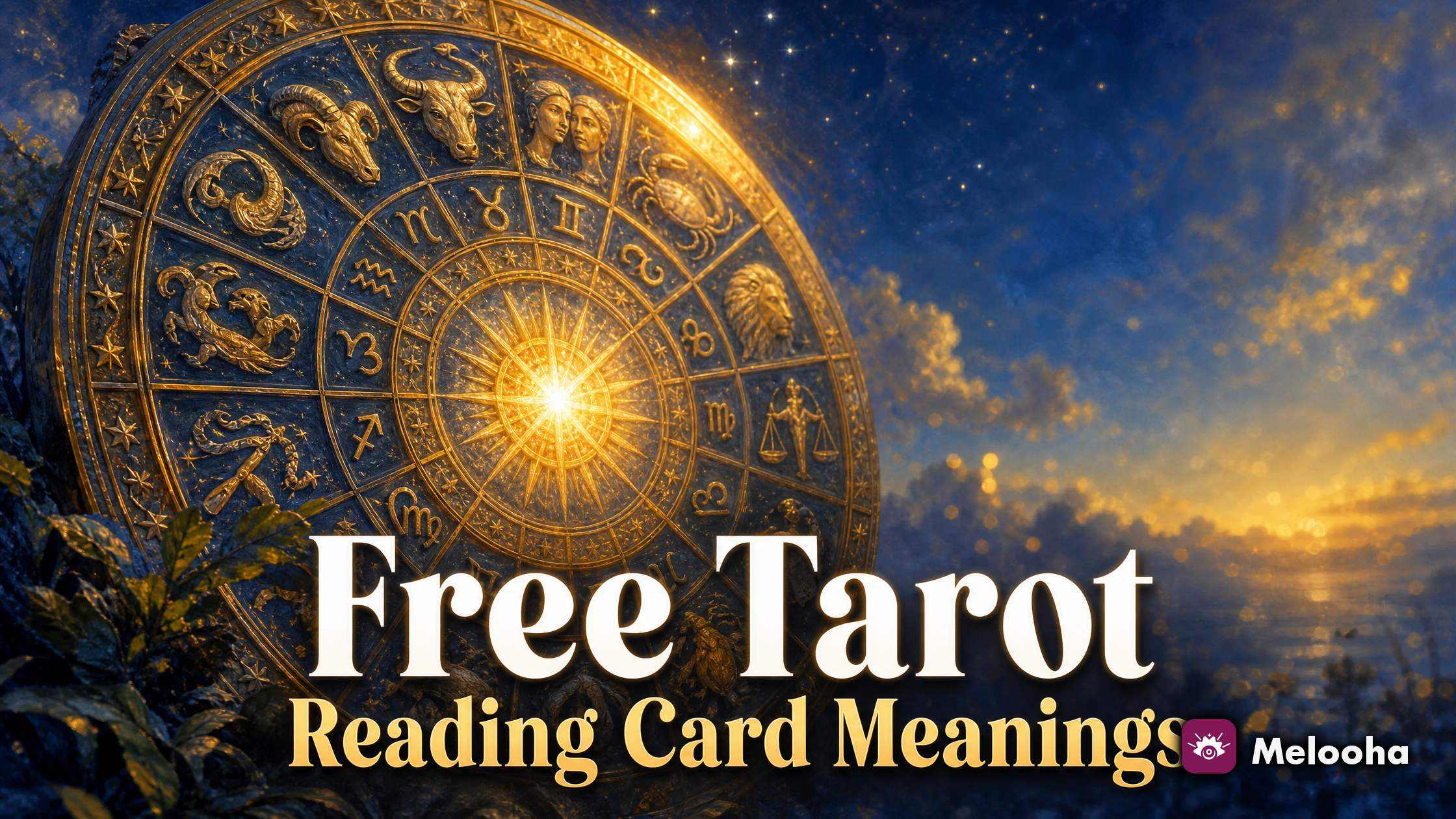
You can do a free tarot card reading yourself with any standard 78-card deck: shuffle while holding a clear question, draw one or three cards, and read each card's meaning in the position it falls. A three-card spread of past, present and future is the easiest start. Tarot is a reflective tool for thinking through a situation, not a fixed prediction, and it works differently from Vedic astrology, which is calculated from your birth date, time and place.
- A free tarot reading needs only a deck, a focused question and a simple spread such as one card or three cards.
- Major Arcana cards like The Sun, The Tower and Judgement point to big themes, while the Minor Arcana describe everyday details.
- A reversed card usually softens, delays or turns inward the upright meaning rather than making it purely negative.
- Tarot reflects your present situation, whereas a Vedic birth chart maps longer patterns from fixed birth details.
How do I do a free tarot card reading at home?
Sit somewhere quiet and write down one open question, such as "What should I focus on in my career right now?" rather than a yes or no question. Shuffle the deck until it feels done, cut it, and draw cards face down. For one card, the card is your main message. For three cards, read left to right as past, present and future, or as situation, obstacle and advice. Note whether each card is upright or reversed, read its meaning, and then ask how the cards connect as a story. Free online draws work the same way: a random draw replaces shuffling, and the interpretation is still yours to reflect on.
Which spread should a beginner use?
Start with a single daily card for a week to learn the deck. Move to the three-card spread once the meanings feel familiar. The ten-card Celtic Cross gives depth but is easy to over-read, so keep it for when you can already interpret three cards confidently.
What does The Sun card mean in a reading?
The Sun is one of the most positive cards in the deck. Upright, it shows clarity, success, warmth, vitality and things coming into the open. In love it suggests joy and honesty, in career recognition and good energy, and as a yes or no answer it leans strongly towards yes. Reversed, The Sun does not turn dark: it suggests the good outcome is delayed, dimmed by self-doubt, or that you are being too optimistic about details.
What do Justice and Temperance mean?
Justice is about fairness, truth, cause and effect, and decisions with consequences. It often appears around legal matters, contracts or moments where honesty is required. Reversed, it points to unfairness, avoided responsibility or bias. Temperance is about balance, patience and blending opposites. It advises moderation and a steady middle path. Reversed, it warns of excess, impatience or being pulled between extremes.
Is The Tower card always bad?
The Tower signals sudden change: something built on shaky ground breaks down. It can feel unsettling, but its deeper message is that false structures are being cleared so something truer can be built. Reversed, it can mean resisting a necessary change or a crisis that unfolds slowly rather than all at once. Read it as a wake-up call, not a curse.
What do The Hanged Man and Judgement mean?
The Hanged Man is about pausing, surrender and seeing from a new angle. Progress may seem stuck, but the card advises letting go of control and waiting. Reversed, it suggests stalling for the wrong reasons or refusing to make a needed sacrifice. Judgement is about awakening, reckoning and a calling to rise to a new stage of life. It often comes when you are reviewing the past and ready to act. Reversed, it suggests self-criticism or ignoring an inner call.
How is tarot different from Vedic astrology?
Tarot works with the moment: the cards you draw reflect the question and mood of the present, so the same question asked months apart can give different cards. Vedic astrology is calculated from your exact birth date, time and place, using planetary positions under the Lahiri ayanamsa, and it describes lasting tendencies and timing through tools like dashas and transits. Many people use tarot for day-to-day reflection and a birth chart for the bigger picture. Some readers also link Major Arcana cards to planets and signs, for example The Sun to the Sun, though these links come from Western esoteric tradition rather than classical Jyotish texts.
When should I consult an astrologer instead of drawing cards?
If your question is about long-term timing, such as marriage, career phases or health periods, a birth-chart reading gives a steadier framework than a card draw. Tarot is best for clarifying feelings and choices right now. Whichever you use, treat the result as guidance to think with, not a certainty, and never let a reading replace medical, legal or financial advice.
- Lahiri ayanamsa
- Brihat Parashara Hora Shastra
Frequently Asked Questions
A random online draw uses the same card meanings as a physical deck. How useful it feels depends on your question and honest reflection, since tarot offers guidance rather than guaranteed predictions.
Yes. Self-reading is common. Keep questions open, write your cards down, and revisit them later to see how the meanings played out.
That is a popular belief, not a rule. Buying your own deck is perfectly fine.
Asking repeatedly tends to create confusion. Give a situation time to develop, often a few weeks, before asking again.
Not necessarily. Reversals usually mean the card's energy is blocked, delayed or turned inward.
Every article is checked against the classical texts by our astrologers before it goes up.

Related reading
Latest articles