Rudraksha Benefits: What Each Mukhi from 1 to 12 Traditionally Means
A plain guide to the 1 to 12 mukhi rudraksha, the deity and planet tradition links to each, and how to choose and wear one sensibly.
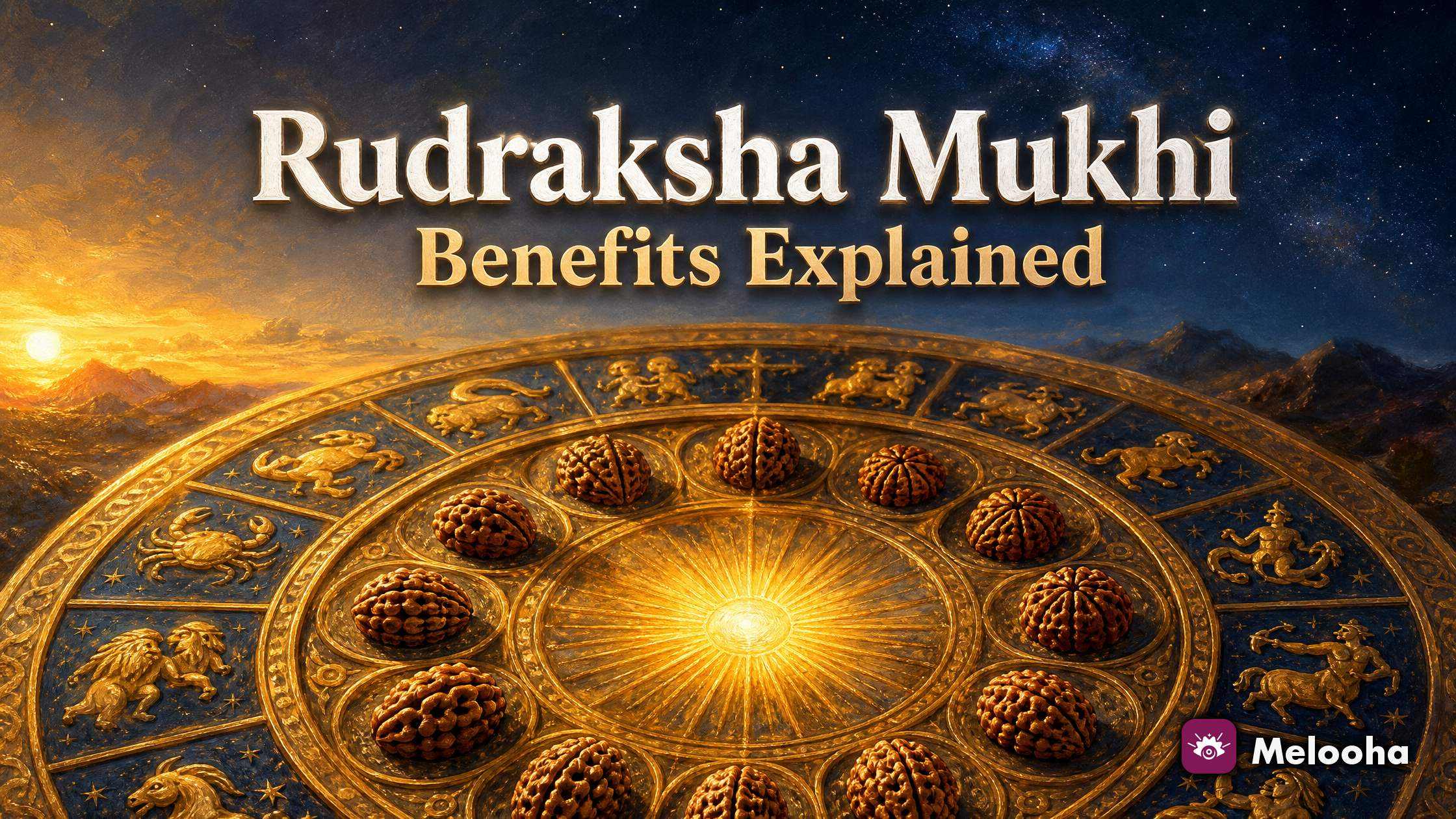
Rudraksha benefits depend on the mukhi, the number of natural lines on the bead. In tradition, each mukhi from 1 to 12 is linked to a deity and often a planet, and is worn for calm, focus, devotion and support in the areas that planet governs. The 5 mukhi is the most common and is considered suitable for almost anyone. These are traditional beliefs, not guaranteed outcomes, and a rudraksha is never a substitute for medical care.
- A rudraksha's mukhi, the count of natural vertical lines, decides which deity and planet tradition associates it with.
- The 5 mukhi rudraksha is widely treated as a safe, general-purpose bead for daily wear and japa.
- Many astrologers match higher mukhis to planets in a person's birth chart, so checking your kundli first helps.
- Authenticity matters more than rarity, and benefits described are traditional guidance rather than proven effects.
What is a rudraksha and why does the mukhi matter?
A rudraksha is the dried seed of the Elaeocarpus tree, long revered in Shaiva tradition as sacred to Lord Shiva; the name is commonly read as Rudra plus aksha, the tears of Shiva. Each bead carries natural vertical grooves called mukhis, or faces. Tradition assigns every mukhi its own ruling deity, and later astrological practice pairs many of them with a planet. That is why a 1 mukhi and a 7 mukhi are described so differently. Associations vary between texts, lineages and sellers, so treat the list below as the most commonly followed version rather than a fixed rule.
What are the benefits of 1, 2 and 3 mukhi rudraksha?
1 mukhi (Ek mukhi): associated with Shiva himself and often with the Sun. It is traditionally linked to spiritual focus, detachment and clarity of purpose. Genuine round Ek mukhi beads are extremely rare, so this is the mukhi most often faked; the half-moon (kaju) variety is more commonly available. 2 mukhi: associated with Ardhanarishvara, the united form of Shiva and Parvati, and with the Moon. It is worn for harmony in relationships, emotional balance and unity between partners. 3 mukhi: associated with Agni, the fire deity, and with Mars. Tradition connects it with releasing past guilt, building confidence and energy, and burning away lethargy.
What are the benefits of 4, 5 and 6 mukhi rudraksha?
4 mukhi: associated with Brahma and with Mercury. It is favoured by students, writers and speakers for memory, learning and expression. 5 mukhi: associated with Kalagni Rudra, a form of Shiva, and with Jupiter. This is the most abundant bead and the standard choice for japa malas. It is traditionally worn for calm, steadiness of mind and general wellbeing, and is considered suitable for men, women and children alike. 6 mukhi: associated with Kartikeya, son of Shiva, and with Venus. It is linked to willpower, grounded emotions, charm and artistic ability.
What are the benefits of 7, 8 and 9 mukhi rudraksha?
7 mukhi: associated with Goddess Mahalakshmi and with Saturn. It is traditionally worn for financial stability and for easing difficult Saturn periods. 8 mukhi: associated with Lord Ganesha and with Rahu. It is linked to removing obstacles, fresh beginnings and steadier judgement. 9 mukhi: associated with Goddess Durga in her nine forms and with Ketu. It is worn for courage, fearlessness and inner strength, and is popular with devotees of Shakti.
What are the benefits of 10, 11 and 12 mukhi rudraksha?
10 mukhi: associated with Lord Vishnu. It has no single ruling planet in most traditions and is described as a protective bead, believed to shield against negativity and ease the effects of all planets. 11 mukhi: associated with Hanuman, and in some traditions with the eleven Rudras. It is linked to courage, self-discipline, adventurous spirit and sharp decision-making. 12 mukhi: associated with Surya, the Sun god, and the Sun. It is worn for leadership, radiance, self-confidence and authority, and is often chosen by people in public or administrative roles.
Which mukhi rudraksha should I wear?
If you simply want a bead for peace and daily prayer, the 5 mukhi is the usual starting point. For a specific purpose, many astrologers look at your birth chart and suggest the mukhi tied to a weak or important planet, for example 7 mukhi when Saturn is under strain, or 12 mukhi to strengthen the Sun. Casting your kundli with a free kundli maker lets you see which planets are prominent before choosing. Some people also combine several mukhis in one mala; practice here differs by family and guru.
How is a rudraksha usually worn and cared for?
Common practice is to wear it on a thread of red, yellow or black silk, or in silver or gold, around the neck or wrist, and to energise it with prayer before first wearing. Monday, the day associated with Shiva, is a popular day to begin. Beyond that, rules on removing it during sleep, bathing or other activities differ widely by family and region, so follow the guidance of your own tradition or teacher. To care for it, keep it dry, clean it gently with a soft brush and water, and occasionally oil it lightly so it does not crack.
How can I tell if a rudraksha is genuine?
Look for mukhis that run naturally from top to bottom without carved or glued joins, and a natural hole rather than a crudely drilled one. Be cautious with very cheap rare beads, especially round 1 mukhi or high mukhis, since these are most often artificially made. The popular water test, where a bead is said to sink if real, is unreliable because dense fakes also sink. For higher-value beads, buy from a seller who provides a laboratory certificate, ideally with an X-ray image showing the internal seed chambers match the mukhi count.
- Shiva Purana
Frequently Asked Questions
Tradition generally holds that rudraksha can be worn by people of any age, gender or background, and the 5 mukhi in particular is considered suitable for everyone. Specific restrictions vary by family and region.
There is no fixed timeline. Many wearers describe a sense of calm that grows with regular prayer and mindful wearing, but these are personal and traditional experiences, not guaranteed results.
It is traditionally considered the most spiritually significant because it is linked to Shiva himself, but that does not make it the right choice for everyone. Its rarity also makes it the most frequently counterfeited.
No. Rudraksha is worn as a spiritual and devotional aid. It should never replace medical diagnosis or treatment.
Yes, combinations are common, and many malas mix mukhis for different purposes. An astrologer or your family tradition can guide which combination suits you.
Every article is checked against the classical texts by our astrologers before it goes up.

Related reading
Latest articles