Krishna Janmashtami 2026: Nishita Puja Window, Fasting Rules and Parana
Janmashtami falls on Friday, 4 September 2026, with a short 16-minute midnight puja window. Here is when to worship, how to fast and when to break it.
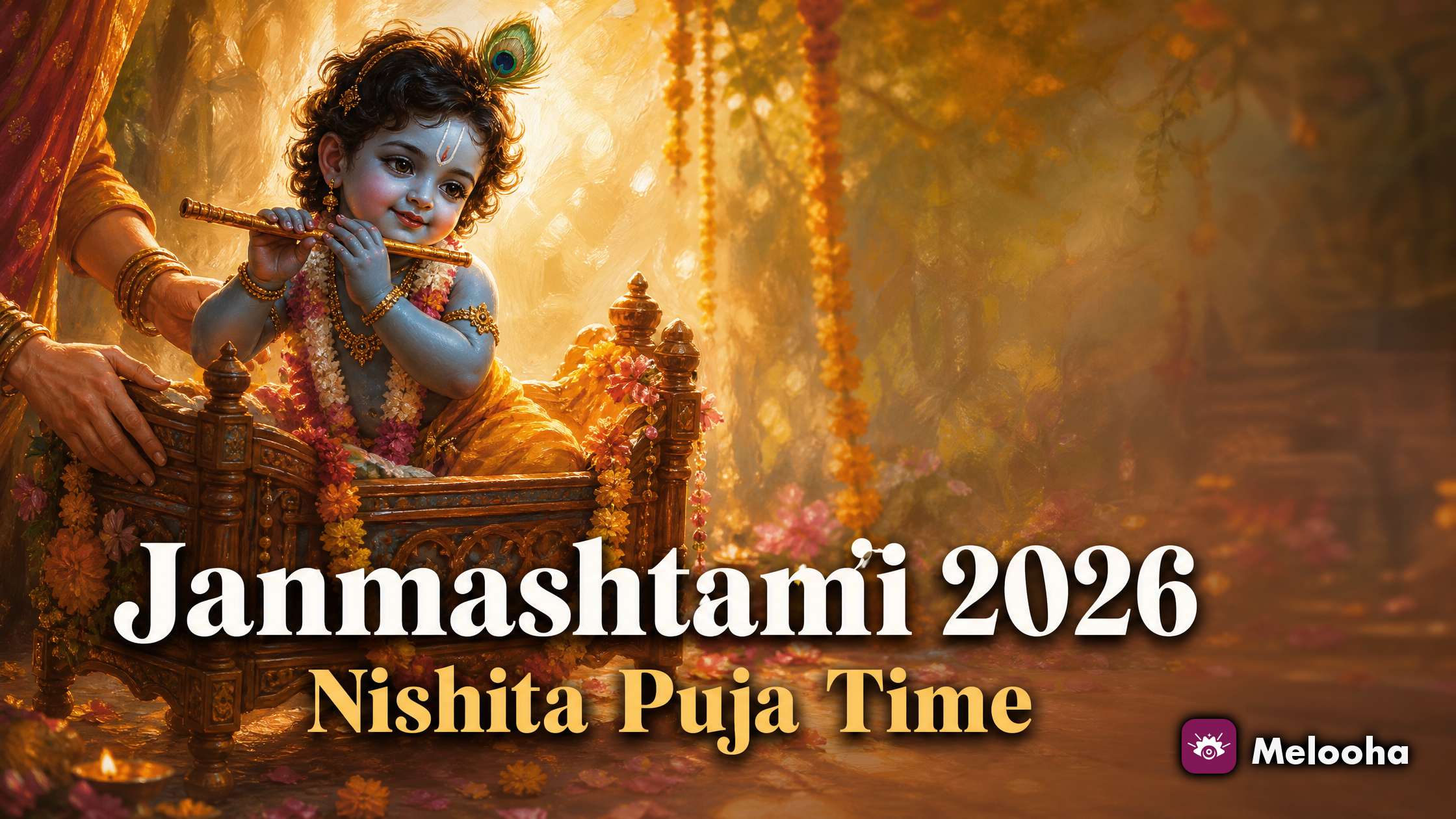
Krishna Janmashtami 2026 is observed on Friday, 4 September 2026. The Nishita kaal puja muhurat is 11:58 PM to 12:14 AM (16 minutes), on the night of 4 September 2026 (New Delhi, IST). The window is short because Krishna Ashtami tithi ends at 12:14 AM, 5 September 2026. Devotees fast through the day and break it after the midnight puja or the next day at parana.
- Krishna Janmashtami 2026 falls on Friday, 4 September 2026.
- The midnight Nishita puja window runs from 11:58 PM to 12:14 AM (16 minutes), so have everything ready before 11:58 PM.
- Ashtami tithi runs from 2:25 AM, 4 September 2026 to 12:14 AM, 5 September 2026, which is why the puja window closes early.
- Smarta and Vaishnava dates can differ by a day, so follow the date your family or temple tradition uses.
When is Krishna Janmashtami in 2026?
Krishna Janmashtami 2026 is on Friday, 4 September 2026. All times here are for New Delhi (IST); other cities differ by a few minutes. Krishna Ashtami tithi begins at 2:25 AM, 4 September 2026 and ends at 12:14 AM, 5 September 2026. Since the festival marks Krishna's birth at midnight on Ashtami, the night of 4 September is the one that holds Ashtami at midnight, which makes Friday the observance day. In the Amanta calendar this Ashtami falls in Shravana; in the Purnimanta calendar used across much of North India it is Bhadrapada Krishna Ashtami. It is the same day, just named differently.
What is the Nishita puja muhurat for Janmashtami 2026?
The Nishita kaal puja muhurat is 11:58 PM to 12:14 AM (16 minutes), 4 September 2026. This is the midnight window when Krishna's birth is celebrated. It is unusually short this year because Ashtami tithi ends at 12:14 AM, 5 September 2026, cutting off the second half of the usual midnight period. Practically, finish the preparation (bathing items, clothes for the idol, cradle, bhog) before 11:58 PM so the abhishek and cradle ceremony fall inside the window. Moonrise on the night is at 11:24 PM, and many devotees offer arghya to the moon before the midnight puja.
Why can Smarta and Vaishnava Janmashtami dates differ?
Smarta households generally follow Ashtami at midnight. Vaishnava traditions also weigh Rohini nakshatra, the nakshatra of Krishna's birth, and so their date can differ by a day. On 4 September 2026 Rohini nakshatra runs until 11:04 PM, 4 September 2026, which ends shortly before the Nishita window begins. Because the two rules can point to different nights, ISKCON and other Vaishnava temples may announce their own date. If you follow a particular sampradaya or temple, go by the date they announce.
How is the Janmashtami fast kept?
Devotees fast through the day on 4 September and keep vigil into the night. The strictness of the fast differs by family and region: some keep a nirjala fast, others take fruit, milk or phalahar foods. Choose what suits your health; elderly people, pregnant women and anyone on medication usually keep a lighter fast. The day is spent in prayer, reading or listening to stories of Krishna, and bhajans. Rahu kaal on the day is 10:45 AM to 12:20 PM (1 hour 35 minutes), which many people avoid for starting new work, though the fast itself continues through it.
How is the midnight puja performed?
At midnight, the idol of baby Krishna (Laddu Gopal) is bathed (abhishek), dressed in fresh clothes and ornaments, and placed in a cradle. The cradle is gently rocked while the family sings bhajans, and bhog is offered. The exact items, mantras and order of worship vary by family and region, so follow your household tradition. Temples hold bhajans and jhankis, tableaux of scenes from Krishna's life, through the evening.
When should you break the Janmashtami fast (parana)?
There are two common customs. Some devotees break the fast right after the midnight puja, once bhog has been offered to Krishna. Others break it the next day, 5 September 2026, at parana. Traditions differ on the exact parana rule, some linking it to the end of Ashtami and Rohini, others to sunrise, so for the precise parana time in your city check your local panchang or follow your temple. Start with the prasad offered at the puja and eat lightly.
What happens the day after Janmashtami?
In Maharashtra, Dahi Handi is held the next day, on 5 September 2026, where teams form human pyramids to break a pot of curd hung high, recalling Krishna's love of butter. Temples in Mathura, Vrindavan and elsewhere continue celebrations. Festival timings are the same for everyone in a city, but how a period affects you personally depends on your own birth chart, which Melooha can check.
- Swiss Ephemeris (planetary data)
- Lahiri ayanamsa
- Nirnaya Sindhu
- Bhagavata Purana
- Vishnu Purana
Frequently Asked Questions
Krishna Janmashtami 2026 is observed on Friday, 4 September 2026. The midnight puja falls on the night of 4 September, from 11:58 PM to 12:14 AM. Some Vaishnava temples may announce a different day as they also weigh Rohini nakshatra.
Krishna Ashtami tithi ends at 12:14 AM, 5 September 2026, so the midnight window is cut short and runs only from 11:58 PM to 12:14 AM.
Ashtami begins at 2:25 AM, 4 September 2026 and ends at 12:14 AM, 5 September 2026 (New Delhi, IST).
It depends on your family tradition. Some keep a nirjala fast, while many take water, fruit and milk. Choose what your health allows.
Moonrise on 4 September 2026 is at 11:24 PM in New Delhi.
Every article is checked against the classical texts by our astrologers before it goes up.

Related reading

Latest articles