Chandra Grahan 28 August 2026: Timings, Sutak Rules and India Visibility
The Purnima lunar eclipse of Friday, 28 August 2026 happens while the Moon is below the horizon in India, so sutak does not apply here.
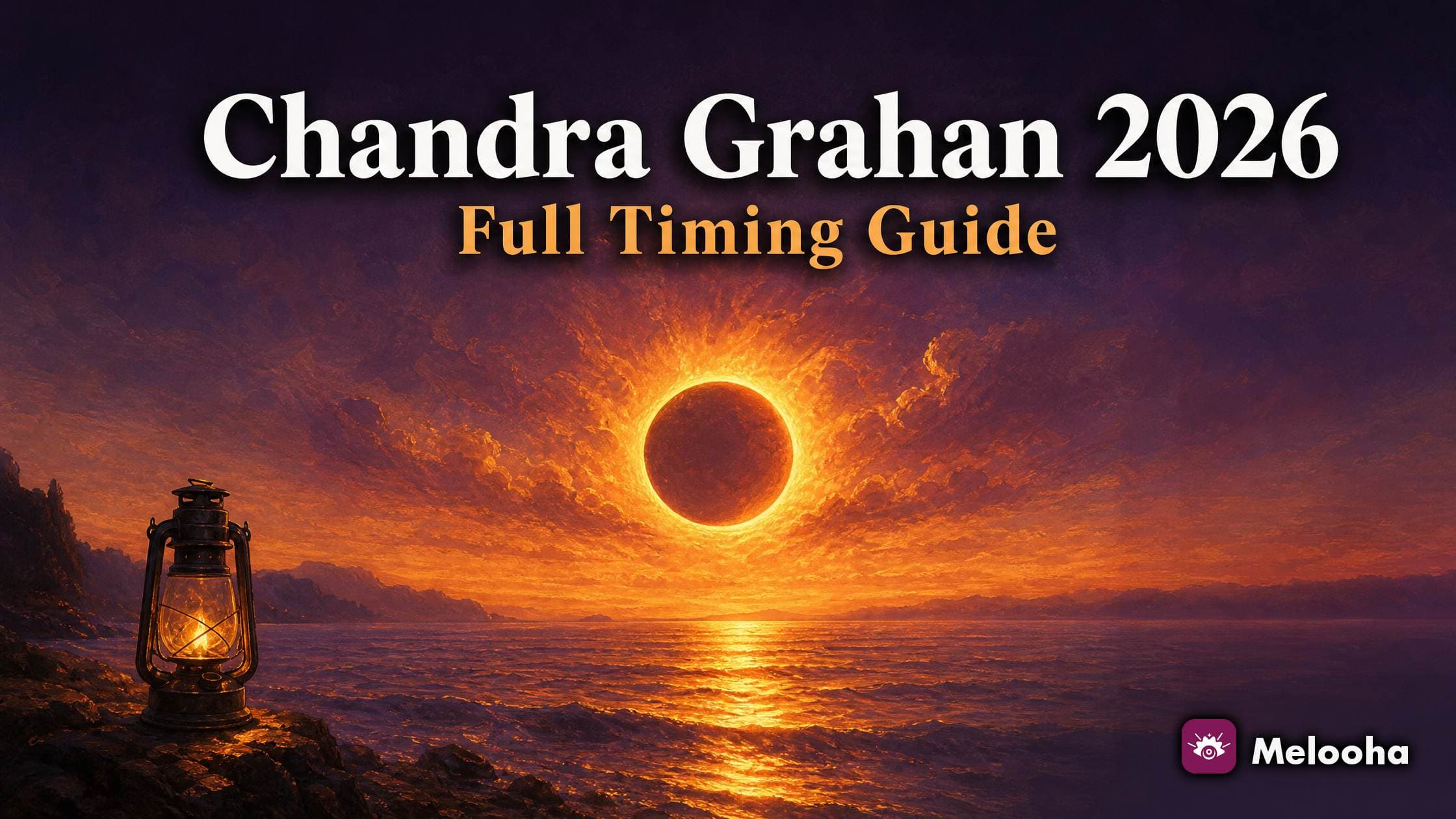
The Chandra Grahan (lunar eclipse) of Friday, 28 August 2026 runs from 6:53 AM to 12:31 PM, 28 August 2026, with maximum eclipse at 9:42 AM (IST, New Delhi). This eclipse is not visible from India, so sutak does not apply in India. It falls on Shukla Purnima with the Moon in Shatabhisha nakshatra, Kumbh rashi.
- The lunar eclipse on 28 August 2026 begins at 6:53 AM, peaks at 9:42 AM and ends at 12:31 PM IST.
- It is not visible from India because the Moon has set by then, so sutak is not observed in India.
- The eclipse falls on Shukla Purnima in Shatabhisha nakshatra, Kumbh rashi.
- Daily routines, temple visits and cooking need no eclipse-related changes in India for this grahan.
When is the Chandra Grahan in August 2026?
The lunar eclipse takes place on Friday, 28 August 2026. All times here are IST for New Delhi; other Indian cities differ by a few minutes. The eclipse begins at 6:53 AM, 28 August 2026, reaches its maximum at 9:42 AM, 28 August 2026, and ends at 12:31 PM, 28 August 2026. It is a deep partial eclipse, with close to the whole Moon passing into Earth's shadow at its peak.
Can the lunar eclipse be seen from India?
No. This eclipse is not visible from India. In New Delhi the Moon sets before sunrise at 5:57 AM and does not rise again until 6:54 PM, so it stays below the horizon for the whole eclipse. Viewers in regions where the Moon is up during those hours will see it; in India there will be nothing to observe in the sky.
Does sutak apply to this Chandra Grahan?
No, not in India. Traditional texts tie sutak to a visible eclipse, and since this grahan cannot be seen anywhere in India, sutak does not apply here. Temples, meals, travel and regular puja can continue as normal. If you are abroad in a place where the eclipse is visible, local custom there would govern, and practice differs by family and region.
Which tithi, nakshatra and rashi is the eclipse in?
The eclipse falls on Shukla Purnima, which begins at 9:09 AM, 27 August 2026 and ends at 9:48 AM, 28 August 2026, so the maximum at 9:42 AM comes just before the full Moon tithi closes. The Moon is in Shatabhisha nakshatra (until 3:13 AM, 29 August 2026) in Kumbh rashi, with the Sun in Singh.
What does this eclipse traditionally signify?
In Jyotish, a lunar eclipse is associated with the mind, emotions and the mother, and its sign and nakshatra colour the traditional reading. Kumbh and Shatabhisha, ruled by Saturn and Rahu, are linked with community, healing and detachment. Because the eclipse is not visible in India, most traditions treat its ritual effect here as minimal. Any interpretation is traditional guidance, not a certain prediction; people with the Moon or lagna in Kumbh often simply take the day quietly.
What can you do on 28 August 2026?
Since sutak does not apply, you can observe Purnima as you usually would. Many families use the full Moon for charity, prayer or a simple fast, and customs differ by family and region. Other day timings in New Delhi: Rahu kaal 10:46 AM to 12:22 PM (1 hour 36 minutes), Abhijit muhurat 11:57 AM to 12:48 PM (51 minutes), sunset 6:48 PM. Eclipse timings are the same for everyone in a city, but how a period affects you depends on your own chart, which Melooha can check.
- Swiss Ephemeris (planetary data)
- Lahiri ayanamsa
- Brihat Samhita
- Muhurta Chintamani
Frequently Asked Questions
It begins at 6:53 AM, peaks at 9:42 AM and ends at 12:31 PM, 28 August 2026 (IST), but it cannot be seen from India.
No. This eclipse is not visible from India, so sutak does not apply in India.
Because the eclipse is not visible in India, traditional eclipse precautions are generally not observed here. Follow your family's custom if you prefer.
Yes. With no sutak in India, meals and cooking can continue normally.
The eclipse occurs in Kumbh rashi and Shatabhisha nakshatra. Traditional readings focus on Kumbh, though effects are considered mild where the eclipse is not visible.
Every article is checked against the classical texts by our astrologers before it goes up.

Related reading
Latest articles